
Thứ Sáu, 12 tháng 9, 2014
Exploring the hidden charm of Cambodia
When planning for tours or vacation to Southeast Asia, most people are often attracted towards the old world attractions of Vietnam and the remarkable hospitality of Thailand. Yet sandwiched between these two magnificent countries is Cambodia. Cambodia is without doubt a spectacular country with an array of attractive features that should not be missed. Whether you are thinking of visiting the world-famous Ankor Wat or exploring the many museums in Phnom Penh, you should definitely expect a memorable and exciting tour of Cambodia.
Before I discuss some of the attractive features and must visit places of Cambodia, It is essential that you get to understand a bit of Cambodian History. Cambodia which was once known as Kampuchea is the land of the Khmer people. Its culture has been influenced by the Theravada Buddhism which is practiced by some minority ethnic group such as Cham, Vietnamese, Chinese and other hill tribes such as the Jarai, Brau and Kavet. It borders Laos to the North, Thailand to the West, Vietnam to the East and the beautiful Gulf of Thailand to the Southwest.
Here is a brief of some of these amazing features.

Among the must visit places here is the Royal Palace which whose tall towers conquers the city’s skylines. A remarkable building, this highly decorated palace has typical Khmer roof and numerous other decorative details. The palace is still the home of the monarch and therefore, you will only be allowed to explore some selected parts of the building e.g. the throne hall.
Another of the beautiful beaches is found in the beautiful town of Kep, which was originally a seaside retreat for the French colonists. Here you can take a short boat trip to the golden sand of Koh Tonsay.
Other places to explore in Cambodia include; the Yak Loum Crater Lake, the Kalai Jungle, and Tonle Sap, Phnom Sampeu (the hill with the killing caves), Tuol Sleng Prison and The killing fields. Apply for your esta visa today and get to experience the beauty of Cambodia.
Before I discuss some of the attractive features and must visit places of Cambodia, It is essential that you get to understand a bit of Cambodian History. Cambodia which was once known as Kampuchea is the land of the Khmer people. Its culture has been influenced by the Theravada Buddhism which is practiced by some minority ethnic group such as Cham, Vietnamese, Chinese and other hill tribes such as the Jarai, Brau and Kavet. It borders Laos to the North, Thailand to the West, Vietnam to the East and the beautiful Gulf of Thailand to the Southwest.
Why Cambodia?
Cambodia offers a perfect destination for travellers who wish to discover somewhere with amazing landscape, culture and history that hasn’t been diminished by overabundance of tourism. It is home to ancient shrines, great cities, magnificent Ankor Wat and the beautiful beaches.Here is a brief of some of these amazing features.
Phnom Penh
Phnom Penh, the capital city of Cambodia is the perfect place to start your adventure. Bustling and vivacious, Phnom Penh is located on the banks of River Mekong and is home to numerous attractive features and places to keep visitor and travellers enchanted for days, from museums and markets to street food and palaces.Among the must visit places here is the Royal Palace which whose tall towers conquers the city’s skylines. A remarkable building, this highly decorated palace has typical Khmer roof and numerous other decorative details. The palace is still the home of the monarch and therefore, you will only be allowed to explore some selected parts of the building e.g. the throne hall.
Ankor
Ankor Wat is ranked the most attractive feature in Cambodia, and it is located in the UNESCO world heritage site of Ankor and covers a region of 400sq Km. Being one of Asia’s popular and most magnificent archaeological site, Ankor is a wide complex of temples and other historical remains from the many capitals of Khmer empire. It is also considered to be one of the world’s largest religious buildings and is adorned with gorgeous symmetry and numerous unique elementsBeaches
While Cambodia is thought to be more of a cultural destination than a beach destination, it is known to have some beautiful stretches of sand. Moreover, the sandy beaches of Cambodia unlike Thailand and Vietnam, attracts fewer tourist and therefore it is an ideal place for those people who like to get off the beaten track and enjoy the peace and quietness. One of the popular beaches here is the Sihanoukville, which was initially established as a deep water port to enhance trade between Vietnam and Cambodia.Another of the beautiful beaches is found in the beautiful town of Kep, which was originally a seaside retreat for the French colonists. Here you can take a short boat trip to the golden sand of Koh Tonsay.
Tonie San River
For those visitors who love Kayaking, this is the place to be. Tonie San River provides a great opportunity for a kayaking adventure through the jungles of Virachey National Park and also offers a chance to explore the amazing waterfalls and the ruins of Ho Chi Minh Trials.Other places to explore in Cambodia include; the Yak Loum Crater Lake, the Kalai Jungle, and Tonle Sap, Phnom Sampeu (the hill with the killing caves), Tuol Sleng Prison and The killing fields. Apply for your esta visa today and get to experience the beauty of Cambodia.
Thứ Hai, 8 tháng 9, 2014
TRAVEL TIPS: TOP 10 PLACES TO VISIT IN CAMBODIA

Cambodia, a country which has seen untold horrors during the rule of Khmer Rouge is slowly rising as a top tourist destination. Some years back Angelina Jolie did a movie here" Lara Croft the Tomb Raider" which showcased the beauty of this country. Since then, tourists have been flying to Cambodia in large numbers. The place is riddled with wonderful temples of Angkor, beautiful tropical beaches and a variety of other natural attractions. Following are top ten must visit places in this country.
Angkor Wat
Also known as the city temple, this is the most magnificent Angkor temple and a major tourist attraction. The temple architecture reflects native Khmer idea of the temple mountain i.e. the home of gods in Hinduism. It was built in the early 12th century by King Suryavarman II. This temple is termed as one of the finest monuments in the world.
Preah Vihear
This is a Khmer temple located 525 meters atop a cliff in Dangrek Mountains. Of all the Khmer temples, this is the most outstanding. Constructed between the 11th and 12th century.
Koh Ker
These ruins used to be the capital of the Khmer empire for a short period between 928 and 944AD. Though it was for a short time, spectacular buildings were constructed such as the Prasat Thom, a 98 It tall temple pyramid, another amazing structure here is the giant Garuda, a mythical half bird, half human creature.
Bayon Temple
Bayon temple, built at the center of the royal city draws many tourists just to see its sea of stone faces. These smiling faces which stare in all directions are believed to be the portrait of King Jayavarman VII. The king built this temple in the 12th century as a way of expanding his capital Angkor Thom.
The S-21/ Tuol Sleng Genocide Museum
A visit to this museum will remind one how peace is vital to a society; the museum showcases brutality of war. The Cambodian war caused the death of more than 3 million Cambodians between 1975 and 1979. This was once a peaceful high school but the war turned it into a torture and interrogation center.
The Killing Fields
Those who survived the S-21 were taken to the killing fields for complete extermination. The government turned the lace into a monument. Skulls and bones collected from the fields are stored here; also there are many mass graves in the area.
Sihanoukville
Also known as Kampong Som, Sihanoukville is a port city with a beautiful beach on the Gulf of Thailand. After the tour of various temples upcountry, this is an awesome place to relax.
Tonle Sap
This is the largest fresh water lake in South East Asia. A fun thing about it is that it shrinks and expands with seasons. Since the lake drains into Mekong River, during the dry periods, the lake shrinks and when it rains the, accumulating water changes the direction of flow which creating an enormous lake. Many people live on floating villages around the lake.
Silver Pagoda
This building situated in the Royal Palace complex is a store for many national treasures including gold and jeweled Buddha statues. Its walls are adorned with mural of the Ramayana myth.
Ta Prohm
This is where Angelina Jolie's movie "The Tomb Raider" was screened. The temple has not been renovated so as to show tourists the state of the temple when it was discovered. The temple walls are therefore still entangled with tree roots.
Author Bio:Scott Archer is a professional content writer and blogger from the UK who shares his travel experiences. His hobbies include travelling, trekking and cooking and he is currently working on a project Australia Visa which helps in visa assistance
.
Thứ Năm, 14 tháng 8, 2014
Where Cambodia's shocking past is on show

Few countries in Asia have suffered as much turmoil and internecine warfare in recent decades as Cambodia.
The "secret bombing" campaign in the early 1970s, orchestrated by the soon-to-be-impeached President Richard Nixon and his secretary of state, Henry Kissinger, the most contentious of Nobel Peace Prize winners, pushed many moderates towards the Khmer Rouge, who stormed into Phnom Penh in April 1975 to declare victory and begin a reign of tyranny that some historians have called the most radical experiment in communism ever conducted.

With an agenda of half-baked Maoism and class warfare that included emptying cities, banning money, and executing intellectuals -- or anyone wearing glasses -- the Khmer Rouge tried to create an agrarian utopia.
Instead, they wound up masterminding a genocide that left an estimated 1.7 million Khmers dead.
That legacy is on grim display in Phnom Penh's most popular dark tourism sites of the secret prison at Tuol Sleng and the Killing Fields.
Textbook tortures

Known by the code name S-21, the former high school of Tuol Sleng became the Khmer Rouge's secret prison and the most potent symbol of its brutality.
Over the course of four years as many as 20,000 prisoners passed through here, including four Frenchmen, one Brit and two Americans.
Only seven survived.
Upon arriving at the prison, each inmate was photographed.
These black and white portraits hang in the second of four buildings. They are the most haunting part of this memorial site.
Some inmates are wide-eyed with fright. Others appear resigned to their fate.
Some are mere children. Others are women with babies.

All of them put a human face on what was an inhuman regime hell-bent on extinguishing every last spark of individuality and family loyalty from its citizenry, for the Khmer Rouge referred to itself only as "Angkar" (the Organization).
Its leader was a paranoid megalomaniac whom, as Philip Short recounted in his comprehensive biography, "Pol Pot: The History of a Nightmare," believed in preserving secrecy at all costs, to the point where his handwriting has never yet been identified.
Building A has been preserved exactly as the Vietnamese invaders, weary of Khmer Rouge attacks, found it in early 1979, right down to the bloodstains on the floor and the implements of torture left on the bed frames scabbed with rust.
In another building, paintings by Vann Nath, one of the seven survivors, illustrate in living colors how the prison's torturers went about their deathly business, extracting the most trumped up confessions through the most barbaric of means.

Far from being a museum piece, the tragedy of Tuol Sleng continues to play out in the last act of a UN-backed genocide trial.
The prison's former chief, Comrade Duch, the alias of Kain Guek Eav, has already been sentenced to life in prison for war crimes, while two other members of the Khmer Rouge top brass, Nuon Chea and Khieu Samphan wait in the wings for their trials to begin.
Burial grounds
The first time I visited the Killing Fields outside Phnom Penh in 2003, I was transfixed by a tree with a sign that read in Khmer and English: "Chankiri tree against which executioners beat children."
That was done to save bullets.
My driver pointed at nails sticking out of the tree -- they had been used to drive home the regime's barbarity and speed up the executions.
Just then, a little girl appeared beside the tree, her face peeking over an urn stacked with bones that went up to her neck.
She looked like a ghost, but in fact was one of the child beggars in the area.

The tree still stands, but the urchins have been evicted.
When local authorities renovated the Killing Fields in 2011, this series of mass graves, where the Khmer Rouge executed and buried the prisoners trucked in from Tuol Sleng, they turned it into a site that documents, with painstaking accuracy, the ultra-Maoists' atrocities.
Complete with a pagoda of skulls for an epicenter-piece, these burial grounds have a concussive impact on visitors.
Thanks to the refurbishments, you can listen to the strident battle hymns of the Khmer Rouge once blasted from speakers to drown out the cries of the condemned men and women being beaten to death with the axles of oxcarts, or having their throats slit with the serrated edges of a palm frond.
To really come to grips with Cambodia's dark past and understand why 70% of its populace are under 30, these two memorial sites stand as tombstones to those times of turmoil and the Khmers' courageous resilience in the face of peril.
Instead, they wound up masterminding a genocide that left an estimated 1.7 million Khmers dead.
That legacy is on grim display in Phnom Penh's most popular dark tourism sites of the secret prison at Tuol Sleng and the Killing Fields.
Textbook tortures
Known by the code name S-21, the former high school of Tuol Sleng became the Khmer Rouge's secret prison and the most potent symbol of its brutality.
Over the course of four years as many as 20,000 prisoners passed through here, including four Frenchmen, one Brit and two Americans.
Only seven survived.
Upon arriving at the prison, each inmate was photographed.
These black and white portraits hang in the second of four buildings. They are the most haunting part of this memorial site.
Some inmates are wide-eyed with fright. Others appear resigned to their fate.
Some are mere children. Others are women with babies.
All of them put a human face on what was an inhuman regime hell-bent on extinguishing every last spark of individuality and family loyalty from its citizenry, for the Khmer Rouge referred to itself only as "Angkar" (the Organization).
Its leader was a paranoid megalomaniac whom, as Philip Short recounted in his comprehensive biography, "Pol Pot: The History of a Nightmare," believed in preserving secrecy at all costs, to the point where his handwriting has never yet been identified.
Building A has been preserved exactly as the Vietnamese invaders, weary of Khmer Rouge attacks, found it in early 1979, right down to the bloodstains on the floor and the implements of torture left on the bed frames scabbed with rust.
In another building, paintings by Vann Nath, one of the seven survivors, illustrate in living colors how the prison's torturers went about their deathly business, extracting the most trumped up confessions through the most barbaric of means.
Far from being a museum piece, the tragedy of Tuol Sleng continues to play out in the last act of a UN-backed genocide trial.
The prison's former chief, Comrade Duch, the alias of Kain Guek Eav, has already been sentenced to life in prison for war crimes, while two other members of the Khmer Rouge top brass, Nuon Chea and Khieu Samphan wait in the wings for their trials to begin.
Burial grounds
The first time I visited the Killing Fields outside Phnom Penh in 2003, I was transfixed by a tree with a sign that read in Khmer and English: "Chankiri tree against which executioners beat children."
That was done to save bullets.
My driver pointed at nails sticking out of the tree -- they had been used to drive home the regime's barbarity and speed up the executions.
Just then, a little girl appeared beside the tree, her face peeking over an urn stacked with bones that went up to her neck.
She looked like a ghost, but in fact was one of the child beggars in the area.
The tree still stands, but the urchins have been evicted.
When local authorities renovated the Killing Fields in 2011, this series of mass graves, where the Khmer Rouge executed and buried the prisoners trucked in from Tuol Sleng, they turned it into a site that documents, with painstaking accuracy, the ultra-Maoists' atrocities.
Complete with a pagoda of skulls for an epicenter-piece, these burial grounds have a concussive impact on visitors.
Thanks to the refurbishments, you can listen to the strident battle hymns of the Khmer Rouge once blasted from speakers to drown out the cries of the condemned men and women being beaten to death with the axles of oxcarts, or having their throats slit with the serrated edges of a palm frond.
To really come to grips with Cambodia's dark past and understand why 70% of its populace are under 30, these two memorial sites stand as tombstones to those times of turmoil and the Khmers' courageous resilience in the face of peril.
Thứ Năm, 17 tháng 7, 2014
Shopping in Siem Reap
Whether you are looking for handicrafts or traditional and contemporary Khmer fashion, Siem Reap is an excellent place to shop for all things of Cambodiaduring your tour in this country. In addition to the classic memories of Cambodia, Siem Reap has many art galleries, fashion boutiques and trendy shops. Many shops are scattered throughout the city with a concentration along Sivutha Boulevard and close to Phsar Chas (Old Market) and Pub Street. Lanes Pub Street, including Alley West harbor, has several small distinctive contemporary art galleries and funky shops. For traditional elements and memories, let’s visit the old market – Phsar Chas.
"Phsar" means "market" in Khmer. The traditional Cambodian Phsar is a sprawling of small shops and stalls, and a visit to one is an important part of the Cambodian experience. Siem Reap's most popular traditional market - Phsar Chas (Old Market), is intended for visitors and locals, offering a wide choice of souvenirs, household items and food - a real cultural experience.

 Cambodia has a long and rich history in silk production stretching back over a thousand years. A fascinating way to learn about Cambodia silk is to visit Angkor Silk Farm, where you can take a free guided tour explaining the process of silk production, cultivation technique of Cambodia of Ikat mulberry and dyeing, weaving and the creation of silk fabrics. In Siem Reap, both raw and fine silks are available in the form of sarongs, clothing and various handicrafts.

Silver areca containers are popular and traditional souvenirs. Made to hold dried betel nut, they are still used in ceremonial life and every day. Today, the containers are mainly to be sold as souvenirs but are still hand made using traditional techniques and styles.

"Phsar" means "market" in Khmer. The traditional Cambodian Phsar is a sprawling of small shops and stalls, and a visit to one is an important part of the Cambodian experience. Siem Reap's most popular traditional market - Phsar Chas (Old Market), is intended for visitors and locals, offering a wide choice of souvenirs, household items and food - a real cultural experience.
What to buy?
Hand-woven silk in Cambodia, stone products and wood carvings, statues and castings, contemporary Cambodian art, Cambodian handicrafts and traditional musical instruments, silver betel containers, colored gems and basketry are the most popular souvenirs. The most useful and one of the cheapest souvenirs that you can buy is a traditional checkered scarf of Cambodian (krama).Cambodia silks
Silver areca (betel) containers
Silver areca containers are popular and traditional souvenirs. Made to hold dried betel nut, they are still used in ceremonial life and every day. Today, the containers are mainly to be sold as souvenirs but are still hand made using traditional techniques and styles.
Gem
Gems are a tempting souvenir. And markets in Siem Reap are full of jewelers. However, you need to have the knowledge or somebody who are knowledgeable about gems when buying gems.Statues and sculptures
Statues and carvings are replicas of Angkorian era works as well as Buddhas and Hindu gods. Statues are made of stone, wood and brass. The replica of Jayavarman VII bust of Angkorian era with its graceful lines and peaceful smile is truly captivating and is perhaps the most popular statue.Contemporary fashion and accessories
Cambodian local designers produce a wide range of clothing and accessories that bring a modern touch to traditional Khmer motifs and patterns. In the Old Market area - Alley West, you will find a collection of trendy clothes shops that sell new-style clothes, many of which are made with fabrics from local and sustainable techniques. Another popular thing that you can see around town is colored recycled rice bags that were remade and become inexpensive products such as handbags and laptop bags.Thứ Hai, 14 tháng 7, 2014
Cambodia travel tips
Cambodia, located on Indochina peninsula is adjacent with 3 other countries. They are Vietnam to the east, Laos to the north and Thailand to the west. In many recent years, Cambodia has become a bright tourism destination because of its attractive sceneries and unique culture to foreign visitors. In this article, How to Travel to Cambodia would like to introduce you some tips for a meaningful and memorable journey to this country of temples.
When to go to Cambodia?
Cambodia has two main seasons that are dry season from November to May and rainy season from June to October. People are suggested to visit Cambodia in dry season because of the convenience of travelling. However, rains and humid climate in the other season make temples of this country more fanciful and sparkling. Therefore, tourists can feel free to choose the time of their trip. Besides, April is the high tourism season in Cambodia because this is festival time of the year. There are some famous festivals such as: National Day takes place on 7th of January, Water Festival belongs to Traditional Holiday in Cambodia Chol Chnam Thmay on 13 – 15/4, every year, etc.
Things to see in Cambodia
Angkor Temples
Cambodia is a country, which has over 95% of total population follow Buddhism. Therefore, the main well-known architectural buildings here are temples. It will be regret if you travel Cambodia without visiting Angkor Wat and Angkor Thom, two of the most typical temple ensembles here. Built in 12th century, with the total area up to 200ha Angkor Wat and Angkor Thom bring visitors an amazement of ancient, sacred and wonderful buildings. These temple ensembles consist of 398 rooms linked by a corridor that lengthens 1500 meters. These are the only temple in Cambodia that has the main gate in the west. However, the material made the temple is the thing impresses visitors. They are all sandstones divided into three types based on their color, chemical ingredients and other factors that seem brighter and brighter under the sunshine.
Silver Pagoda
Silver Pagoda
If the temple of Angkor Wat and Angkor Thom give you, the feeling of something ancient, natural and stunning, Silver Pagoda in Prom Penh is the representation of miracle and magnificence. To the tourist’s amazement, many pieces of silver that weights over 1 kg for each one used to pave floors instead of bricks or other material else. Besides, Golden temple is famous for Buddha statues made of gold or jade.
Cambodia cuisine
Cambodia cuisine
Cambodia is not only the country of temple but also unique cuisine. Cambodia cooking class is influent by some neighbor countries, especially India and China. Therefore, it is not difficult for tourists to find a variety of spices as Indian dish and fat as Chinese ones in almost Cambodian’.
Travel around Cambodia
Travel around Cambodia
In recent years, the transportation in Cambodia is improved significantly to meet tourism demand increasing more and more. Tourists are able to travel by air served by Cambodia Angkor Air.
To visit between destinations in Cambodia, you had better to go by red cub or tuk tuk, popular vehicles in Cambodia. If having a good financial ability, you should move by helicopter at least one time. Enjoying the beauty of temples and pagodas here may be one of the best magical feelings in your life. Besides, hiring bicycle is not a bad idea in case you have a good health and want to explore the sightseeing by yourself. Just by paying a price about 1 – 2 dollars, you can have a whole day riding around the city.
Cambodia, a lovely and friendly country is one of the promise destinations in Southeast Asia in particular and Asia in general because of charming sceneries, peaceful lifestyle and unique culture as well. With this post, we hope you will have a good preparation for your tours in Cambodia.
To visit between destinations in Cambodia, you had better to go by red cub or tuk tuk, popular vehicles in Cambodia. If having a good financial ability, you should move by helicopter at least one time. Enjoying the beauty of temples and pagodas here may be one of the best magical feelings in your life. Besides, hiring bicycle is not a bad idea in case you have a good health and want to explore the sightseeing by yourself. Just by paying a price about 1 – 2 dollars, you can have a whole day riding around the city.
Cambodia, a lovely and friendly country is one of the promise destinations in Southeast Asia in particular and Asia in general because of charming sceneries, peaceful lifestyle and unique culture as well. With this post, we hope you will have a good preparation for your tours in Cambodia.
Thứ Năm, 3 tháng 7, 2014
Royal Government of Cambodia
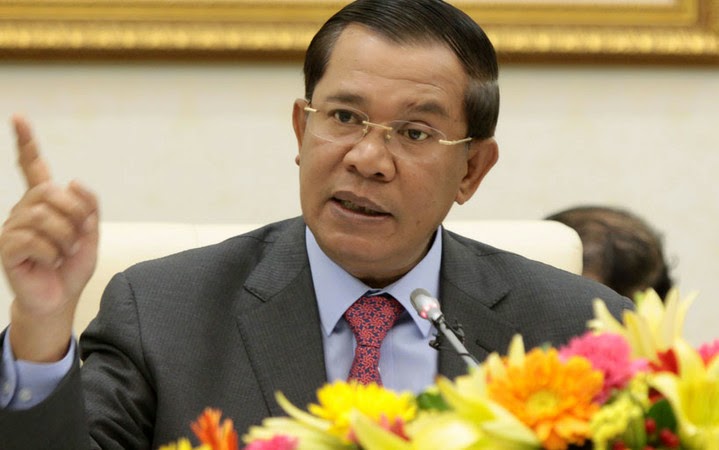 |
| Samdech Hun Sen |
In the past two decades, Cambodia has gone through many major changes reflecting the heroic sacrifice of the Cambodian people to protect and to rebuild their homeland, the standard of their living, and the prosperity of their future. With the October 23, 1991 Paris Peace Agreement, Cambodia achieves full right and sovereignty. For the result, the Cambodian people may fervently develop their country with generous assistance from international communities.
Before reaching their goal of prosperity, they facedmany critical proceedings. With His Majesty vision of Preah Bat Samdech NorodomSihanouk, the beloved king of the Cambodia people, peace and nationalreconciliation were finally achieved.
At the second session of the auspicious plenarymeeting of the National Assembly, I (Samdech Hun Sen, Prime Minister) have the honor to submit the Royal Government of Cambodia's Platform for approval from the august legislative body, the National Assembly. It is a foundation of governance to ensure peace, stability, democracy and development for the Cambodian people and to rebuild their country.
I. Policies:
A. Domestic Policies:The main goal of the Royal Government is to ensure peace, stability,and national unity. In order to create a political stability conducive to theeconomic and social development, and the alleviation of poverty, Cambodiarespect of human rights must be firmly promoted.
1. Pacification:
The Royal Government adheres to national solidarity.To respect the consuls of His Majesty the King, the Cambodians from all walks oflife and political backgrounds from every corner of the world must come togetherto defense their national's independence, peace and prosperity.
To restore permanent peace and political stability,the Royal Government would welcome the return of the remnant of the Khmer Rouge.It continues to integrate the armed force and the people, who support the policyof pacification successfully implemented in Pailin, Samlot, Malai, Anlong Veng,Preah Vihea, and in other areas.
The Royal Government continues to cooperate withinternational organizations to set up the repatriation program to settle theCambodian refugees into their society. It would pay at any price to stop thereturn of the genocidal regime, and the recurrence of the recent past tragedies.The hard-line leaders of the outlawed Khmer Rouge would be put on trail by thecourt. In the meantime, the Royal Government would reinstate a handful of formerservicemen into the Royal Armed Forces. Under the chairmanship of His Majestythe King, the November 13 statement clearly emphasized that the working group incharge of military affairs must immediately and properly implement theagreements set forth in the spirit of the November 12-13 summit. The Kingdom ofCambodia has full sovereignty. It is a unified state, not a seceded state.
2. Liberal Democratic Process andRespect of Human Rights:
The Royal Government adheres to the principle ofdemocratic pluralism and to the respect of human rights for which, it stronglybelieves they are fundamental to the social progress. The democratization andliberalization of all social fabrics must be rapidly addressed, because they arethe essential forces of economic and social developments. The Royal Governmentassures and protest freedom of its citizenry bestowed in the Constitution, inthe Universal Declaration of Human Rights, in the Convenants on Civil andPolitical Rights and Social, Economic and Cultural Right, and in the Conventionon the Rights of Women and Children. It strongly opposes racial hatred. Theoverall structure of the state run human rights institution would be upgraded.
3. Freedom of the Press and of Expression:
The Royal Government vigorously supports freedom ofthe press, freedom of expression and of assembly, which freely contribute tosocial and political conscience. In order to seek different shade and color ofopinions, public forums are encouraged to take place. At the same time, freedomand anarchy should be clearly differentiated. The Constitution provides itcitizenry their freedoms to be enjoyed and honored, not to be destructive andintrusive.
4. The Role of Oppositions:
To mobilize the wisdom from all walks of life andbackgrounds to build the nation, the Royal Government widely supports the roleof oppositions for constructive criticism, and for good services to the nation.The oppositions have full legal rights to perform its political activities. Theyare fully guarantied by the Royal Government equal social and politicalbenefits, such as freedom, justice, security, and employment. They may assistCambodia's young democracy to be fully developed. They do not have to implicatethemselves in order to be labeled oppositions. The Royal Government and theoppositions would have to promote jointly the national interest, the socialstability, and the welfare of the people, so that Cambodia and her people mayenjoy the fruits of long lasting political strength and national stability.
The role of the oppositions shall be defined in the law.
5. The Participation of the Civil Society:
The Royal Government and the civil society shallincorporate their principle of state of law into strengthening democracy,liberty, and social law and order. They may not develop the country byconflicting interests between civil and political societies. The civil societyshall be a key partner of the Royal Government in the construction of Cambodia.In view, the Royal Government would endorse the multiple activities of thenon-governmental organizations and of associations, which have served theCambodian people nationwide. It will appropriate special funds and allocate themto the non-governmental organization in providing services on its behalf to theneedly. The Royal Government would welcome the participation of theinternational non-government organizations in the process of rehabilitation ofeconomic development and in the promotion of democracy and human rights.Therefore, it needs drafting a law on the non-government organizations andassociations.
6. The Rule of Law:
The rule of law is the basic principle of democracy,the sustainability of the government, and of all institutions. It is to ensurefreedom, national interest, justice, harmony, and social sustainability. Aforceful legal structure to end assaults on human dignity is urgently needed.The enforcement and education of law would be widely disseminated. All men areborn free and equal, but they must not be allowed to be above the law. A set oflaw must be applied equally to all.
7. Reforms:
Presently, administrative, judicial, military andpoloce, and economic reforms are urgently to be addressed.
Today, Cambodia's administrative machine is excessive.The Royal Government can not further support it. It would take steps to reformit. It should gradually trimmed. It should be neutral and sound administration,which is capable to effectively serve the people. The rule of civil servantsmust be strictly applied. The training program to update the knowledge and skillof the employs must be spontaneously upgraded and maintained.
The physical structure of provinces and its citiesmust be reviewed. The provincial administration autonomy should seriouslyconsidered. The management of provinces, districts, communes and villages shouldbe properly carried out to rules and regulations.
The judicial system and the court are necessary to beentirely overhauled. By law, they ought to be independent, honest, andtrustworthy. To succeed their quest, the corporations among the nationalinstitutions, such as the National Assembly, the Government, the ConstitutionalCouncil, the Council of Magistracy, and the court, should be overcome. Judges'salaries must be adequately raised. Especially, they judges in the Supreme Courtmust request their summons be properly recorded and executed. However, if thereis a judge committing a violation, the Council of Magistracy should immediatelyreprimand him or her.
The corruption and power abuses, which obstruct thepromotion and supports of the people's living conditions, ought to be stopped.The Cambodia's, the businessmen, and the investors must not be victimized bythose exploitations. The Royal Government of Cambodia considers the fightagainst the corruption as its matter of priority.
- The Royal Government would set transparency in everywork force. The anti-corruption institution would be soon formed. To ensure theeffectiveness in the work force, the following measures would urgently berealized:
- The anti-corruption law against the corrupt,
- The creation of an agency to monitor and to fight corruption,
- The wealth clearance decree,
- The State estates control,
- The encouragement of citizenry to participate in the corruption fight,
- The appropriation of pay raise for the civil servants in accordance to the national budget.
B. National Defense and Security:
The Royal Cambodian Armed Forces (RCAF), the MilitaryPolice, and the National Police would fulfill their roles according to theMilitary and Police rules of order. They must be neutral, obedient, andself-restraint. They must sacrifice their lives to protect the Constitution ofthe Kingdom of Cambodia. They would bravely defense the national independence,sovereignty, and territorial integrity, to maintain peace, security, andstability, and to enforce law and order. They must end insurgency, terrorism,and secession. They must completely eradicate kidnapping, armed robbery, drugtrafficking, artifact smuggling, money laundering, and sexual exploitation ofminor children and women. They must properly enforce the law to make theirhomeland prosperous and safe for all, including diplomats, investors, tourists,and foreign workers.
They would participate in the national developmentprograms. They must be active in the rescue operation to save lives of thepeople from the natural causes. They ought to curtail the use of illegalweapons, and close down the arms black markets.
The service of militia may be reviewed. Some placesstill its assistance. For other places, it help is not applicable. However, thedemobilization of militia and its disarmament should be highly considered.
C. Foreign Policies:
Cambodia adheres to policy of neutrality andnon-alliance. It indiscriminately establishes relations with all friendly statesworldwide. It conducts policies of mutual understanding, equality, respect, andnon-interference in other state's internal affairs.
Cambodia would fortify bilateral friendship andcooperation with its neighbors. The border issues with its neighbors would beresolved through negotiations, and peaceful means.
Cambodia would establish bilateral and multilateralfriendships with regional countries, especially with ASEAN. It wants tocontribute as it may in jointly building the Southeast Asia to be a region ofpeace, tranquility, and prosperity.
When it becomes an active member of ASEAN, Cambodiawould conduct itself within the principle of the agreements.
Cambodia is a member of non-aligned movement. Withinthe principle of agreements it would increase its diplomatic relationship witother nations, and set up embassies within its financial and human resources.
Cambodia with high respect to humanity would conductitself to be a good member of the United Nations.
To solve the problem of illegal immigrants, Cambodiawould utilize its immigration law that enshrines the principle set forth in theUniversal Declaration on Human Rights.
The Royal Government of Cambodia is very grateful tothe international communities for their contribution, peace, democracy andprosperity in Cambodia.
II. Economic Policy:
- The economy is a principle domain to support thenational development program, which involves sustainability and macro-economy.It should effectively use its natural and human resources. Cambodia wouldpromote free market economy linked with the program of combat the poverty, andsocial justice. The economic mechanism runs its course within rules andregulations of free market economy.
- The Royal Government would not manage the market, butit would support it. The Royal Government would grand the private sector theright of self- determination on productivity, investment, and expenditure, andit would intervene much less. For the reasons, it would set legal andadministrative structures to ensure freedom and autonomy of the private sectorto property right, employment, profession, and the right to compete freely.
- It would improve mechanism and structure of economicmanagement to ensure the effectiveness and transparency to cope with corruptionand violation of law. That is very important to stabilize the macro-economy, toboost the people's standard of living, and to encourage the investment.
- It prioritizes the physical agriculturalinfrastructure, electricity and human resources, which are the basic of overalldevelopment. The following goals must be achieved:
- To speed the economic growth in order to improvethe popular living standard and to create more employment. The chief potentialto promote the economic growth is the amass and to transform the natural resources and the national products into the products of export. The RoyalGovernment would improve economic rules and regulations and to promote Cambodiato be a goods producer in order to attract more foreign investment.
- To ensure the stability of Riel currency, to keep the inflationrate at bay, to prevent the loss of revenue and private saving by the Rielfluctuation, and to build confidence in Riel by devaluating with caution thedollar.
- To increase the export of agricultural and manufacturing productswith high expertise and quality.
- The Royal Government would do it best to alleviate the poverty. Thealleviation of poverty is not only the basic of sustainability of the economicdevelopment, but it also the priority to implement the social program.
- To attain the above goals, the Royal Government would seize down thefollowing imbalances:
- Between the need and supply, especially on foods, housing, transportation, education and health care.
- Between the revenue and expenditure within the national budget.
- Between the import and export.
- Between the currency and goods.
- Between salary and the standard of living of civil servant and servicemen.
- Between the increase in the work force and the employment.
- Between the need for national development and the training of human resources.
- The Royal Government would continue to carry out theprojects, which are identified in the national program of rehabilitation anddevelopment of Cambodia. It would focus on the long-term program for theeconomic and social development in the first five years from 1996-2000. It alsoattempts to achieve the urgent need for the investment on public sector.
Based on these basics and the on going achievements,the Royal Government may carry out the following economic strategies:
The Royal Government strongly believes in the processof selecting the ones, who are healthy, well educated, well-disciplined, honest,independent, and responsible. In this spirit, the improvement of quality ofeducation, health services, and food security must be strongly promoted by theRoyal Government, it would prioritize the investment on the vocational trainingand on higher education. The Cambodian workers would be better equipped withskill and the know-how.
The Royal Government would cooperate with the Chamberof Commerce and other professional institutions to set up the center of transferof the know-how.
The present shortcoming of the national infrastructuretremendously undermines the economic growth of Cambodia. The Royal Governmentwould continue to rehabilitate the national infrastructure. Eventually it would privatize the mass transportation and communication, the telecommunication, andthe electrical power supply.
Agriculture:
The main economic infrastructure of Cambodia isagriculture. The Royal Government would enhance the irrigation system, becauseagricultural activities in Cambodia are solely dependent on the weather.Consequently, it is essential to upgrade the General Direction of Irrigation tothe level of Ministry of water Resources and Meteorology. In five years from1998-2003, it would increase the irrigation capacity from 16.62% to 20%, i.e. ancapacity from 374,603 ha. To 450,600 ha. of rice fields.
The water supply would be strictly monitored anddistributed. The high quality of clean water must be absolutely maintained.
The rubber plantation would be privatized. The RoyalGovernment would encourage a large or small scale of rubber production by theprovision of credit and ownership.
The Royal Government would consolidate the forestmanagement to ensure its sustainability. It strictly and completely bans illegallogging. It would take the following steps to:
Cease further investment on wood processing.
Review all forest concession contracts and cancel non-complied contracts. The forest under the non-complied contract would be used for national parks and habitats.
Encourage the companies with complied contracts to modernize their factories in order to increase the value of timber, and to create more jobs for the Cambodians The Royal Government must strictly enforce its reforestation policy.
Review and amend the law on forest management to benefit the investors, who do comply with the rules. Persons, who commit illegal logging and violate the forest law, must be brought to justice.
Industries:
The Royal Government would encourage small and largeindustries to fulfill its tasks. It would focus on strategy of producing exportgoods rather than import ones. The liberalization of international trade makesthe local products difficult to compete in the foreign markets. The smallindustries produce its output enough for domestic use. It strives all efforts tomake the textile industries and agricultural industries to be the core structureof Cambodian industries.
The Royal Government promotes the research andexploitation of petrol, natural gas, and other minerals, which becomes thepotentiality of the national ensure adequate electric supply with low cost andto meet its economic goal.
Trade:
The Royal Government would enhance its policy of tradeliberalization. It would facilitate the free circulation of goods. The price andquantity of the growth of its production. It would also broaden internationaltrade relation by bridging the domestic markets to foreign markets. Finally itwould promoted the integration and global trade.
Tourism:
The Royal Government would promote the development oftourism and make it to become tourism of culture and nature. It would heightenthe private and public investments targeting at building up touristinfrastructure. It would ensure security and political stability. Tourist workhas to be linked by the preservation of natural cultural heritage and naturalenvironment.
Foreign Economic Policy:
The Royal Government adopts a precise politicalguideline of its external economic conforming to the liberalization ofinternational trade, and integrating national economic into the world economic.Through this policy, Cambodia prepares itself to attract and to face regionallyand globally the process of economic internationalization. At the same time, thecompetitive productivity and capacity of Cambodian economy in the international markets will be enhanced through the application of mass based on theavailability of the domestic resources.
Cambodia, however, will face the influx of foreignfinished products, which rejects a number of industries in the country. Thepressure of the integration process of the regional economy, in which Cambodiaexpects to join ASEAN, and the World Trade Organization in the near future, willadd more burden to the national budget through the fall of the tax revenue, andimport duties. These financial activities would change the economic structure of Cambodia. The Royal Government is optimistic and prepares to amend its legalprocedures to accommodate the economic integration.
Investment Policy:
The Royal Government of Cambodia promotes the internaland external investments through the application of the principle and theencouragement of the investment policy of the Kingdom of Cambodia. Itstrengthens its cooperation with friendly countries and their institutions inorder to attract more investment, developed countries and the expansion of themarkets.
To have a good environment for the investment, thesocial political stability and the stability of the macro-economy must beensured. The principle and the guidance of the investment policy must be firmlyadhered . The Royal Government of Cambodia may reform and strengthen theinstitution, which is responsible for the activities of the investment,especially for the improvement on the formality of the application for theinvestment undermining the illegal activities and corruption.
Financial and Monetary Policies:
The Royal Government must ensure the effectiveness ofthe execution of its financial and monetary policies. The fiscal policy recentlyimproved has not yet been properly carried out. The national budget, which has aduty to evaluate, to collect, and to distribute the national resources, is themost important tool to handle the economic and social policies of the RoyalGovernment of Cambodia. Therefore, the national budget must be disbursed distinctively for the support of public services, and for the handling of publicprojects with the economic sense of prudence, conscience, and proficiency, theRoyal Government must give the priority to the promotion of productivity, theprivate investment, the social programs, and public health care. The futureASEAN membership of Cambodia would influence tremendously the reform of therevenue of the national budget. The national revenue by taxation on the importand export goods will be decreased. For that, it would strengthen all faces oftax the entrepreneurs to be in the investment process, and to achieve the budgetsurplus for which it is to be the sources of internal credit, such as for thepublic investment and for the financial intervention to pay raises for theemployees of the government.
To achieve the effective control over the budget andfiscal policies, the Royal Government of Cambodia must immediately take thefollowing steps:
Use every measure at all costs to combat tax evasion.
Strongly prohibit revenue collection and shelter, and disbursement infringing the budgetary system.
Abolish tax exemption, which is not stipulated in the investment law, the law on fiscal policy, and the law on the annual financial management.
The Ministry of economy and Finance must strictly check and control goods before loading in order to properly tax the merchandises, while its services are being effectively conducted with high consideration of time consumption.
Carry out strict measure of austerity, especially against the unneeded expenses. The financial resources from privatization must only be used for the public investment such as the infrastructure, or the counterpart fund of the credit fund from the financial institution.
The fund used other than infrastructure purpose must be prohibited.
The Royal Government undertakes its political will toimpose punishment on fraud, illegal transfer of fund, and corruption. To ensurethe stability of buying power of Riel currency, the Royal Government would setthe spending rate of the national budget to be below the rate of the nationaleconomic growth, and the rate of reserve fund of the banks. The interest rateconducive to the promotion of private saving, and the intervention of theNational Bank in the domestic monetary markets in order to stabilize the rate ofRiel exchange.
The attempts of the Royal Government of Cambodia tocut down the economic imbalance will encounter numerous difficulties, becausethe limited financial resources force it to prioritize the use of the economicmeasure. But often the economic tools to came together at one time. At the sametime, the lingering economic crisis and the declined economic growth in theregion will impact the flow of the foreign investment and the domestic growth.The Royal Government would overcome those economic stumbling blocks in order toattain its economic goal, because of its last achievements. This task needs thejoint participation of national and international sectors to improve nationaleconomy and to strengthen the capacity building, the work sprit, ethics, andsocial obligation of public servants.
III. Culture, Health , Social Obligation:
The Royal Government initiates tough measure torestore and to promote culture heritage and national civilization, to end thedeclination of national culture, to highlight the social ethic, and to promotethe national cultural characteristic and progress. For that, the RoyalGovernment has to expand the education of culture and civilization, to promotethe general understanding of the national identity and pride, and to stop theflow of the foreign culture, which affects the national culture.
On health matter, the Royal Government would promotehealth service to public and private sectors, disease prevention, mother andchild care, flight against the contagious disease, and health check up andtreatment in State hospitals and clinics.
On social issues, the Royal government would upgradethe standard of living of the people and to ensure the equal benefits for thepeople from all walks of life. Primarily,
The Royal Government would cut down to the maximum ofthe vulnerability, and increase the chance for the poor and indigent citizens tobe able to participate in the social and economic programs. It would firmlycarry out the labor law and the international convention on labor unions inorder to secure the right and privilege for the workers, employees, andemployers. It would establish a good working condition to benefit thehandicapped persons, the orphans, the widows, and the indigent men and women, sotheir livings could be better conditioned. It would defense the right of womenand children according to the universal convention. It would engage the women inpolitics and in other social and economic fields. It would assist the minorityto involve in restoring the economic, social, and cultural heritage.
To succeed the social rehabilitation and development,there is an important factor to be addressed; that is the task of buildingsocial conscience, confidence, and self- determination, which produce qualitywork. The idea and stand on ordinary productivity to improve the skill and theknowledge of know-how in agreement with the rules of development must beencouraged.
Đăng ký:
Bài đăng
(
Atom
)
